
When it comes to winemaking, there's nothing as important as the grapes. The grapes are the foundation of what the wine is. They provide nearly all the flavor, and the identity. There is one other thing that is necessary for the grapes to go from being simple, sweet juice and transcend into a luscious wine.
It's overlooked by most people, and it's all around us. I'm talking about yeast, of course. Can I have a figurative show of hands as to how many people know exactly what yeast is?
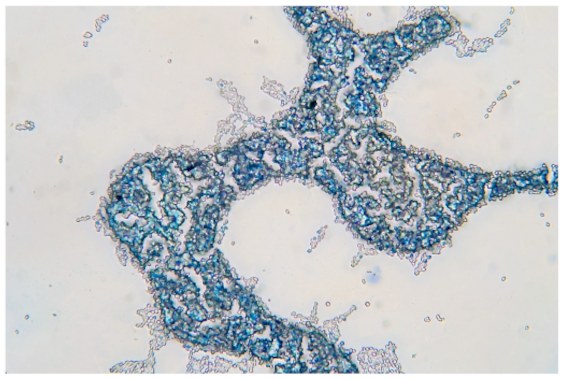
To the layman, most people know it as the powder that you add to flour to make bread. Something about it releases gases while baking that leavens the bread and makes it nice, fluffy and airy. Like anything in life, however, it's a bit more complex than that. Yeast is a live organism. The specific species we use for making alcohol and rising bread doughs is Saccharomyces cerevisiae, or brewer's yeast.
The term "yeast", however, is a very broad descriptor encompassing many different genuses of fungus. To keep it simple, they are unicellular fungi that reproduce by splitting off from a mother cell.
Yeast is all around us, and even on us. It's most commonly found on the outside of fruit, identified as a thin, white or yellowish powder. You'd know exactly what I'm talking about if you've ever picked apples at Apple Hill.
Brewer's yeast takes the sugar that is dissolved in water and breaks it down into carbon dioxide and alcohol, as well as a few other byproducts. This is, generally, why we break open our grapes by crushing them: so that the yeast can get past the skin of the grape and ferment the sugar. This is true for mostly any alcoholic beverage. Beer is made from the sugar in grains, mead from the sugar in honey, and so on.
Of course, I could talk about yeast all day. It does more than just produce alcohol. It would take days to explain all that organic chemistry. For now, go into the world with your newfound knowledge of our favorite fungus. Drink well.


